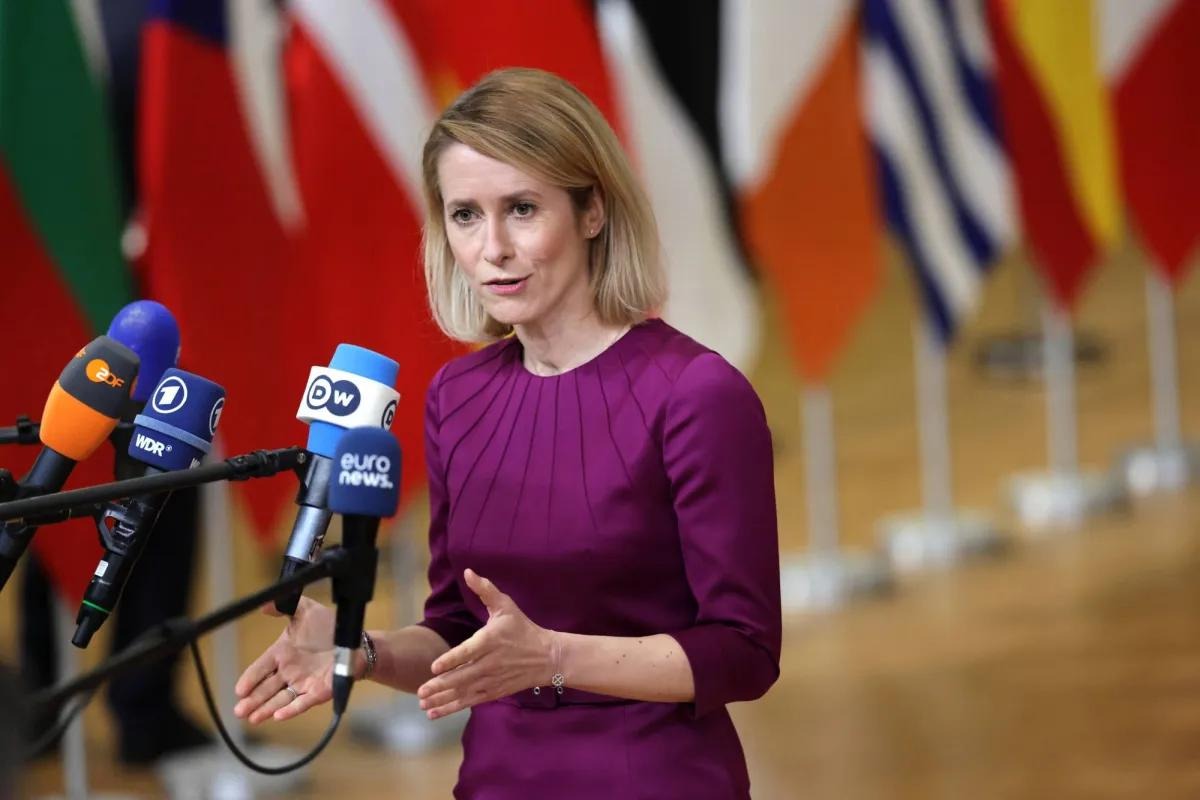
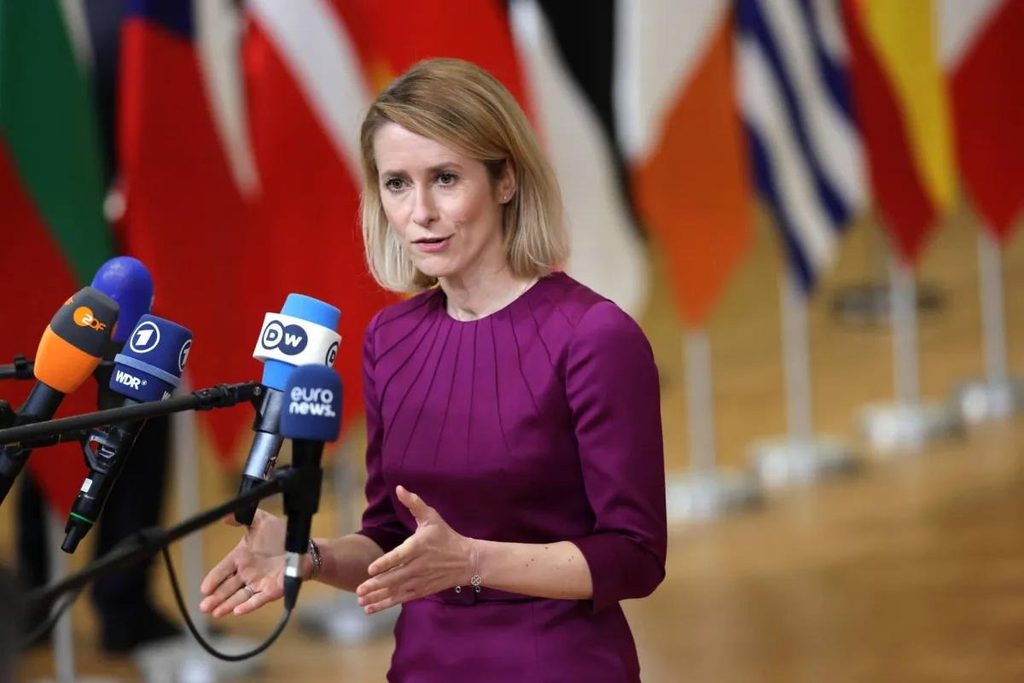
EU foreign policy chief Kaja Kallas has abandoned plans to establish a high-level advisory panel on European defense just hours before its scheduled public launch. The decision reportedly followed opposition from several EU governments, including Germany, France and Italy.
Kallas had first unveiled the proposal during an informal meeting of EU defense ministers in Wicklow, Ireland, on September 1. The proposed panel was intended to bring together former political and military figures to develop recommendations for addressing Europe’s defense capability shortfalls more rapidly.
Former NATO Secretary-General Anders Fogh Rasmussen was expected to lead the group. Former Estonian Defence Minister Jüri Luik and former French Defence Minister Florence Parly were also reportedly among the prospective members. Representatives from the United Kingdom and Ukraine were expected to participate as well, according to diplomats familiar with the plans.
The initiative was due to be formally introduced at a fireside discussion with Kallas on September 7 at Brussels’ Bibliothèque Solvay, with approximately 150 people invited. However, the event was cancelled on the afternoon of September 6, before the panel’s membership had been formally announced.
“Some member states felt this was not the right path to pursue at this moment,” an unnamed EU official told Politico. Kallas’ office will instead explore “new ways of engaging with member states,” the official said.
Reports from German news agency dpa indicated that concerns in Berlin played a significant role in the decision to abandon the initiative. Euractiv separately reported that France, Germany and Italy had jointly opposed the proposal, which had informally been compared with a potential “Draghi report for defense.”
The German government has emphasized that NATO remains its primary framework for military capability and defense planning. Asked about the controversy on Monday, a German Defence Ministry spokesperson declined to comment on consultations between EU governments but reiterated Berlin’s position on the division of responsibilities.
“Fundamentally, defense and armaments policy are the responsibility of the member states, while capability planning and defense planning are derived from NATO planning,” the spokesperson said.
The official added that EU mechanisms including meetings of defense ministers, Permanent Structured Cooperation (PESCO), the European Defence Fund (EDF), the Security Action for Europe (SAFE) and Military Mobility can play a useful supporting role.
A German military spokesperson also appeared to downplay the significance of the latest development, noting that the EU has introduced similar initiatives before.
“The EU has regularly launched various such initiatives in the past. Some find approval, some less so,” the spokesperson said.
The cancellation highlights broader tensions within the EU over the direction and management of its emerging defense agenda. Kallas’ diplomatic service and the European Commission have differing roles in shaping European defense policy, while some member states reportedly feared that the proposed advisory group could duplicate initiatives already being developed under EU Defence Commissioner Andrius Kubilius.
The disagreement also comes as Berlin has separately advocated transferring elements of the European External Action Service (EEAS) into the European Commission, adding another layer to the institutional debate over how Europe should organize its growing defense efforts.
The episode underscores the challenge facing the EU as it seeks to strengthen its defense capabilities while balancing national authority, NATO’s established role and competing institutional priorities within the bloc.