
Saab has been awarded a new contract worth approximately SEK 2.9 billion (about $303 million) by Sweden’s Defense Materiel Administration (FMV) to continue developing concepts for the nation’s next-generation fighter system. The Swedish defense company announced the agreement on Wednesday.
The contract covers work from 2026 through 2028, with options that could extend the program into 2029 and 2030. It follows earlier agreements between Saab and FMV signed in 2024 and 2025.
Under the latest deal, Saab will conduct work involving both airborne and ground-based demonstrators, along with advanced research and the development of concepts for future manned and unmanned aircraft systems. According to the company, the program will help Sweden advance key technologies and capabilities in areas including systems integration, autonomous operations, signature management, propulsion and digital engineering.
The effort is also designed to lower technological and development risks while maintaining flexibility for Sweden as it makes future decisions regarding its air combat capabilities.
Lars Tossman, head of Saab’s Aeronautics business area, said FMV’s continued support is important for advancing and demonstrating technologies expected to play a significant role in future fighter systems.
The latest agreement represents the third major award under Sweden’s Koncept för Framtida Stridsflyg (KFS) initiative, also known as Vägval stridsflyg. The program is intended to explore and define the country’s air combat capabilities beyond 2040.
Sweden initially awarded Saab a KFS contract in March 2024. In October 2025, FMV followed that agreement with a SEK 2.6 billion extension covering activities from 2025 to 2027. That phase included development of a flying demonstrator, with concept and technology work originally scheduled for completion in the third quarter of 2026 and initial flight testing planned for 2027.
Saab has previously presented several future aircraft concepts under its F-series designation. The proposed family includes a crewed fighter as well as uncrewed aircraft in different sizes and configurations, ranging from subsonic to supersonic designs.
The KFS initiative emerged after Sweden decided in 2023 to leave the British-led Team Tempest effort, which subsequently evolved into the Global Combat Air Programme (GCAP). Stockholm instead chose to pursue a domestic approach to defining its future fighter capabilities.
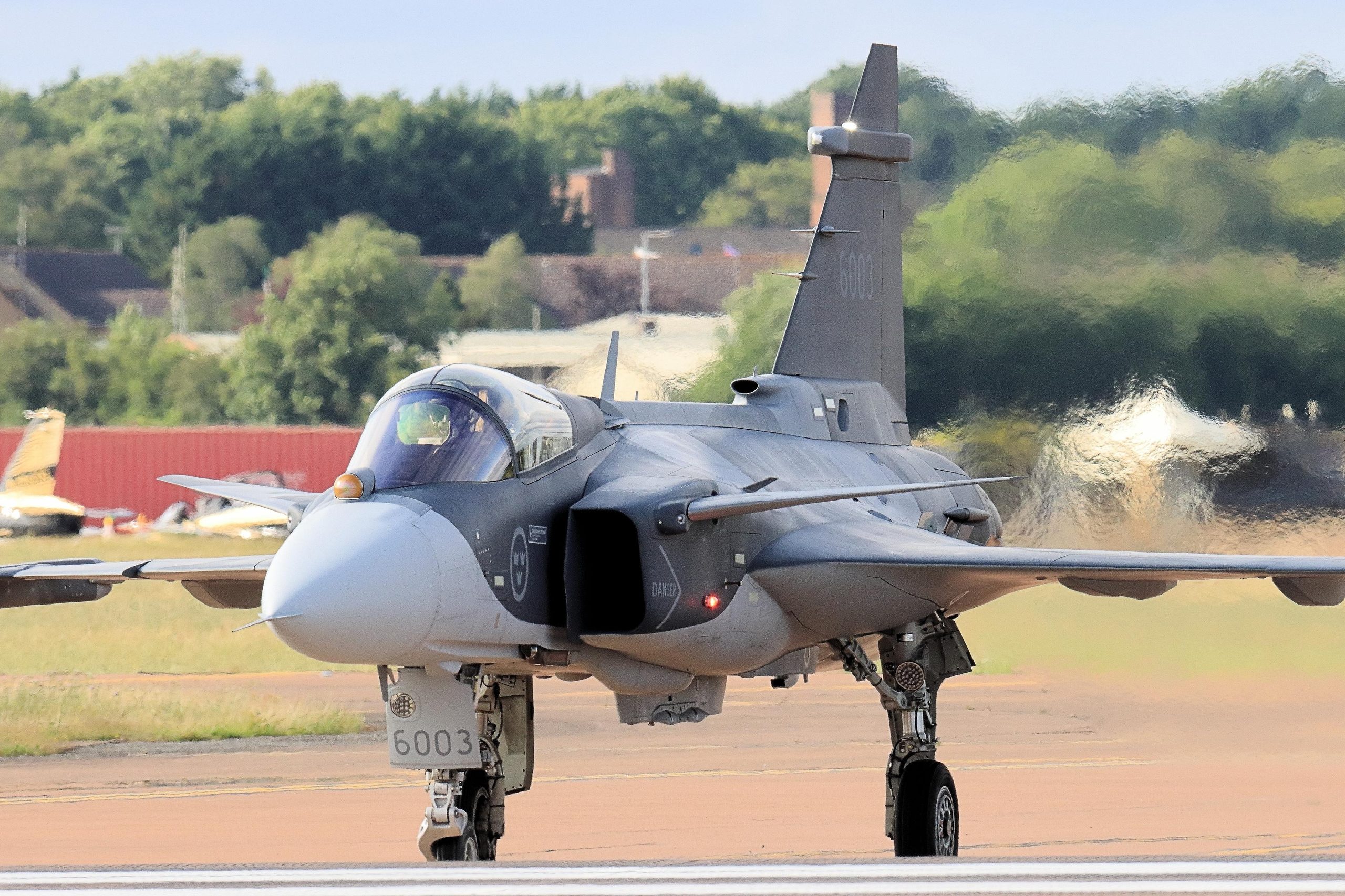
Saab remains central to Sweden’s military aviation industry as the country’s sole fighter aircraft manufacturer. Its aircraft have formed the core of Sweden’s air force for decades, with the Saab Gripen currently serving as the nation’s principal fighter aircraft.