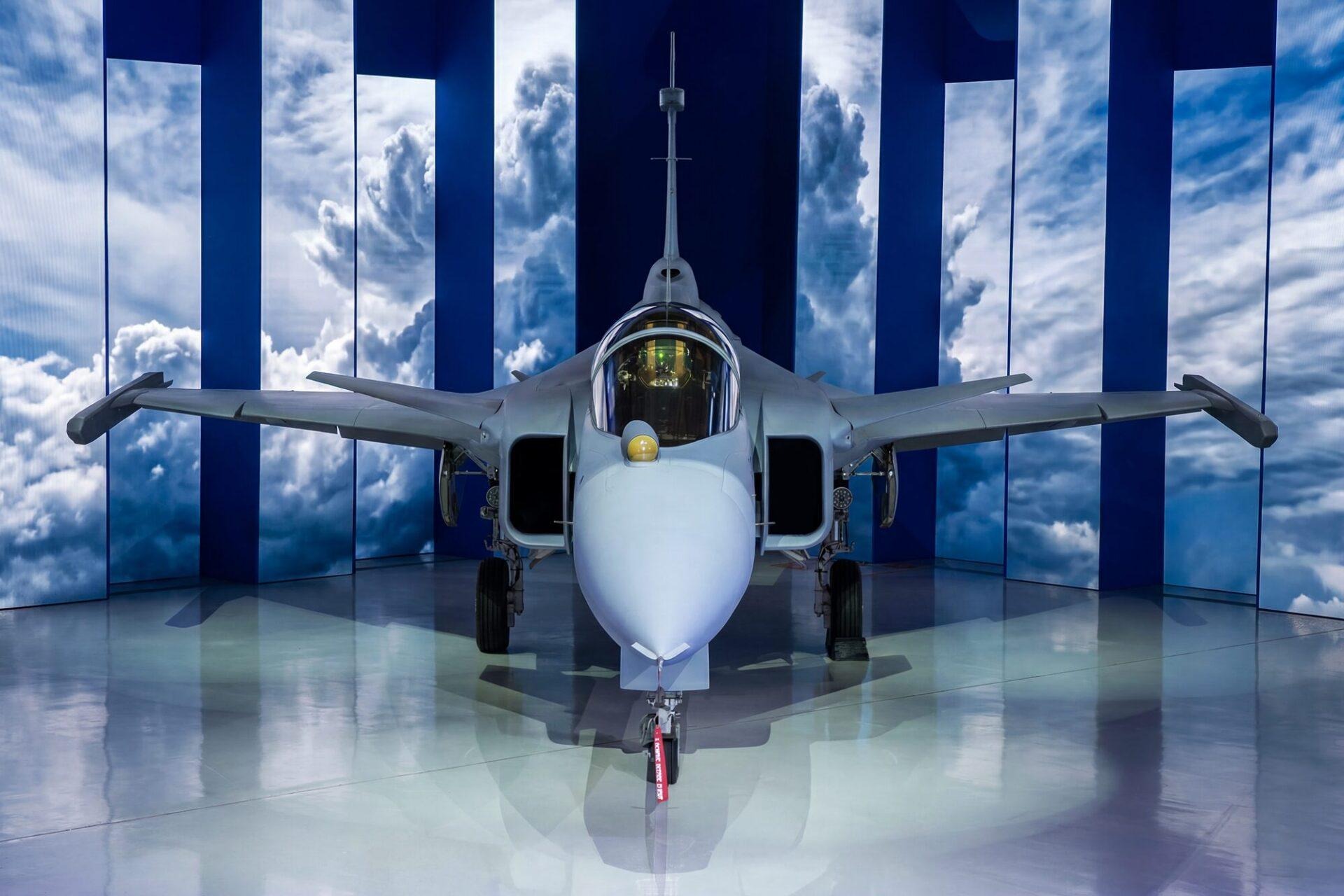
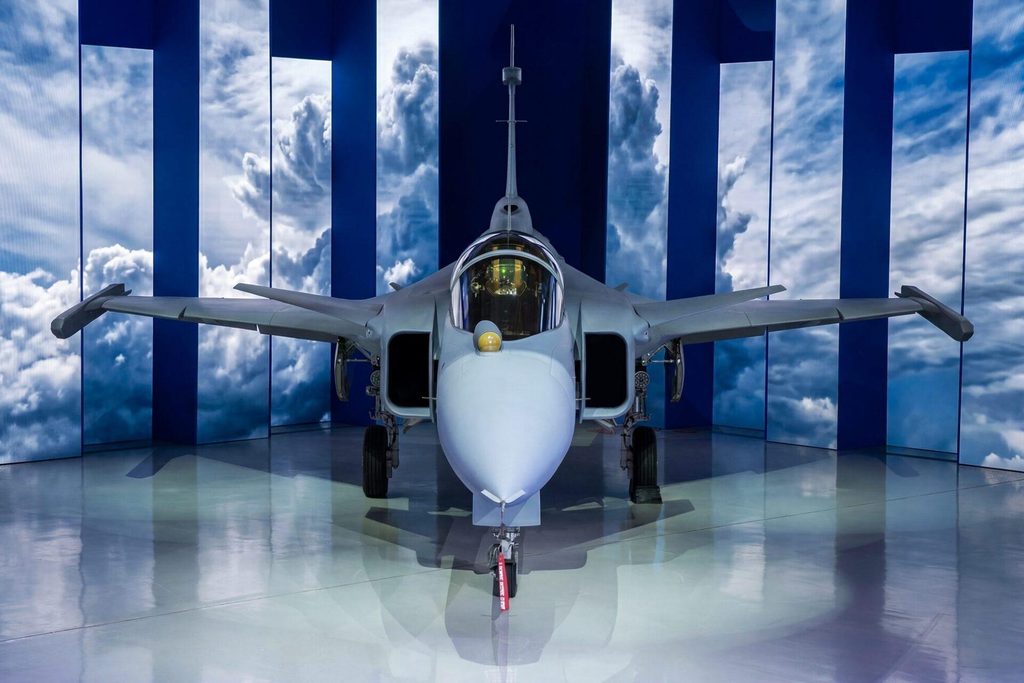
Swedish defence company Saab is preparing to establish a domestic production and support network for its Gripen E multi-role fighter jet in Canada if Prime Minister Mark Carney’s government selects the aircraft.
On October 27, Saab confirmed that it had formed partnerships with several leading Canadian aerospace companies to support the potential manufacture, delivery and long-term maintenance of the Gripen E should Ottawa decide to acquire the fighter.
Canada Reviews Its F-35 Fighter Jet Purchase
Canada had previously committed to purchasing 88 F-35 fighter jets from Lockheed Martin. However, the planned acquisition is now under review amid deteriorating relations with the United States following President Donald Trump’s economic threats against Canada and comments suggesting the country could become the 51st U.S. state.
Canada has paid for 16 F-35s so far. Department of National Defence spokesperson Andrée-Anne Poulin said two aircraft were transferred to Canada on October 9 and October 22.
Prime Minister Carney will ultimately decide whether Canada proceeds with the remaining F-35 purchases, although he has not announced a timetable for the decision.
Meanwhile, the Canadian government is assessing whether the Saab Gripen E could serve as an alternative to the American fighter or complement the F-35 fleet.
Saab Builds Partnerships With Canadian Aerospace Companies
To support its bid, Saab has established partnerships with three Canadian firms: CAE, based in Montreal, Quebec; IMP Aerospace, headquartered in Halifax, Nova Scotia; and Magellan Aerospace, based in Mississauga, Ontario.
Saab President and CEO Micael Johansson said the companies were prepared to develop a Canadian industrial network around the Gripen, with the aim of strengthening operational capabilities, national sovereignty and long-term industrial and technological benefits.
Under a teaming agreement with IMP, Saab plans to establish a final assembly line for the Gripen fighter in Canada if the aircraft is selected. IMP would also undertake electrical assembly production and provide in-service support for the Canadian fleet.
A separate memorandum of understanding with Magellan Aerospace outlines plans for domestic manufacturing of advanced aerostructures, composite structures and other structural assemblies.
Saab had previously signed a memorandum of understanding with CAE covering advanced training for fighter pilots and technicians, mission systems engineering, and aircraft support and sustainment capabilities in Canada.
Together, these arrangements outline how a potential Gripen acquisition could generate domestic manufacturing, training and maintenance opportunities within Canada’s aerospace sector.
Saab’s Existing Canadian Defence Projects
Saab has already secured a significant position in Canada’s defence market through its proposed GlobalEye airborne early warning and control aircraft programme.
On May 27, Carney announced plans for Canada to acquire six GlobalEye aircraft from Saab. The proposed purchase, estimated at more than C$5 billion (approximately US$3.6 billion), is intended to strengthen Canada’s military capabilities while supporting domestic defence manufacturing.
The GlobalEye platform is based on Bombardier’s Global 6500 business jet, which is manufactured in Canada. Carney said at least one-third of the projected GlobalEye aircraft orders for various allied customers would be built in Canada. The wider production outlook was expected to involve approximately 40 aircraft over 15 years.
On September 25, the Canadian government announced an agreement with Saab establishing a framework for future negotiations over the six GlobalEye aircraft.
Stephen Fuhr, Canada’s Secretary of State for Defence Procurement, said the government would seek partnerships that support Canadian employment, innovation and sustained economic growth while securing military capabilities from trusted suppliers.
Saab’s proposed Gripen production arrangements build on this broader effort to strengthen Canada’s domestic defence industry. Whether the fighter is ultimately selected will depend on the government’s ongoing assessment of its military requirements and aircraft procurement options.