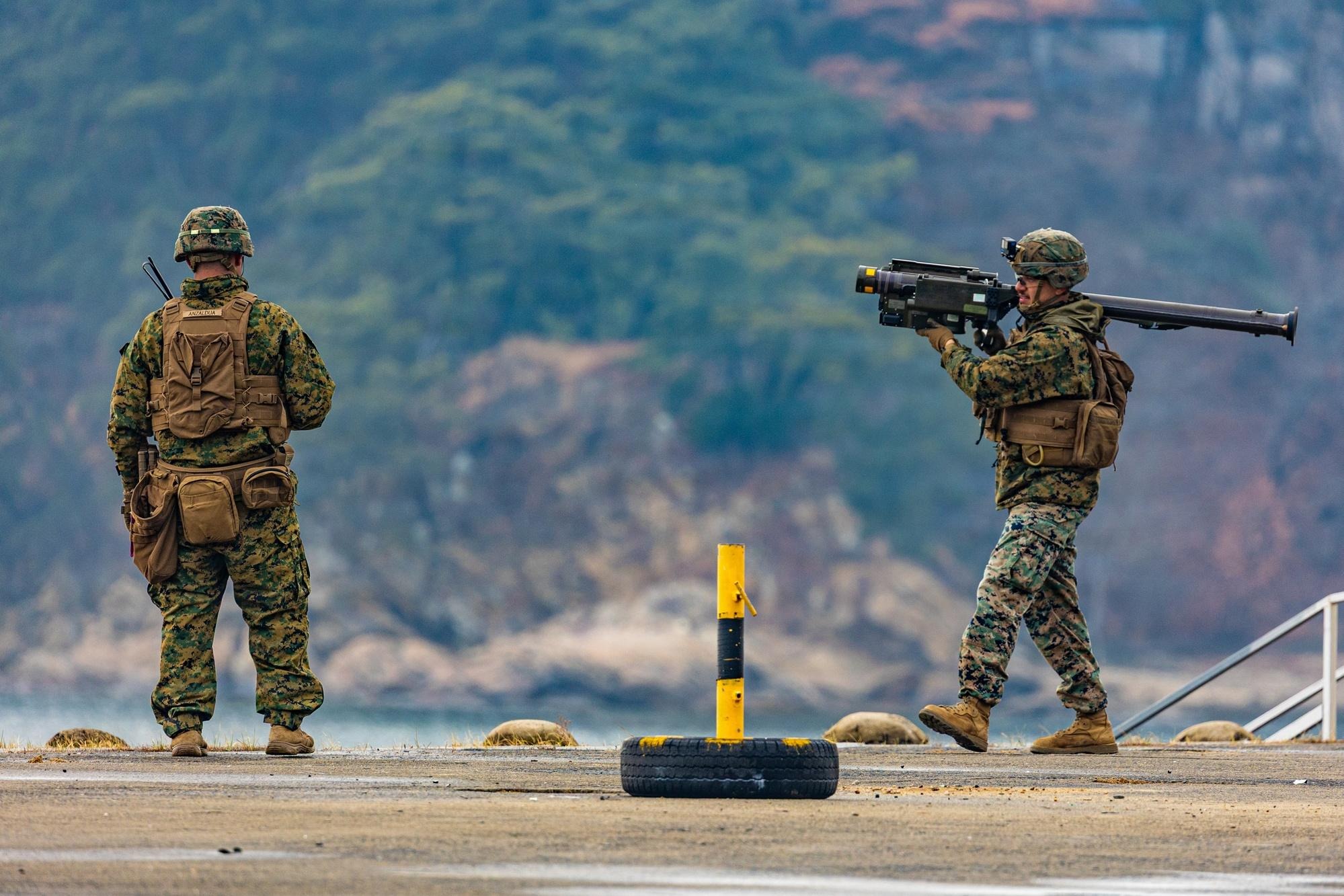
The above image is for illustrative purposes only.
German defence technology company Helsing has introduced Contra, an air defence package combining two interceptor missiles with artificial intelligence (AI) software designed to coordinate engagements against fast-moving attack drones. Company officials said the system aims to bring the cost of each interception below $100,000.
Contra is currently undergoing testing, with commercial availability expected in the second half of 2027, Helsing CEO Gundbert Scherf told reporters at the product unveiling.
The system enters a growing market of defence solutions seeking to address a major challenge in modern warfare: the financial imbalance created when expensive air defence missiles are used against comparatively cheap drones. Several emerging systems are aiming to make counter-drone operations more affordable over time.
Helsing’s announcement also comes amid increasing interest among European governments in purchasing domestically developed defence equipment. Concerns have grown that access to US-made systems, including Patriot interceptors, could become more constrained for allied countries following the war involving Iran.
Two interceptors designed for different threats
Contra combines two missile types developed to counter increasingly fast and capable attack drones.
The first, the AD-1, is called Inferno and uses a jet engine for propulsion. The second, the AD-2, known as Ambush, is powered by a solid rocket motor. According to Scherf, both have been developed in response to the changing characteristics of Russian strike drones, which are increasingly capable of flying at speeds associated with cruise missiles.
Early versions of Russia’s Geran drones, based on Iran’s Shahed design, relied on propellers and travelled relatively slowly. Scherf said Ukrainian air defenders initially achieved interception rates of around 90% against these weapons.
However, Russia has recently begun manufacturing and deploying thousands of faster Geran-4 and Geran-5 drones. According to Scherf, these models can reach speeds of 400–700 kilometres per hour, allowing almost half of the weapons to evade interception and strike their intended targets.
The two Contra interceptors are intended to address different stages of this threat. Inferno, which reportedly reaches 700 km/h and has a range of 20 kilometres, is designed to serve as the system’s primary countermeasure against most incoming drones.
Ambush is intended for more urgent engagements. Travelling at more than Mach 2, or approximately 3,000 km/h, it is designed to rapidly intercept drones that have passed through earlier layers of defence and are approaching their targets. Helsing senior product director Maxwell Adams described these threats as “leakers”.
AI coordination and production strategy
Helsing says the Contra system’s design also prioritises large-scale manufacturing. One element of this approach is the use of active radar seekers built from widely available hardware components.
Company executives said this design could reduce dependence on supply chains associated with China and avoid some of the complications linked to US export controls.
During the launch presentation, a computer animation demonstrated how Contra could be deployed against a large drone attack. In the scenario, 20 Inferno missiles and 40 Ambush interceptors emerged from standard-sized shipping containers to engage an incoming swarm.
Helsing’s AI software automatically calculated the sequence and distance of the interceptions, coordinating the engagement between the different missiles.
Although Contra is not expected to be commercially ready until the second half of 2027, Scherf confirmed that the company has already signed one contract for the system.