Germany and the United States have reached a new defense-industrial agreement that would allow Germany to serve as an additional manufacturing base for U.S. munitions when American defense companies are unable to keep pace with demand.
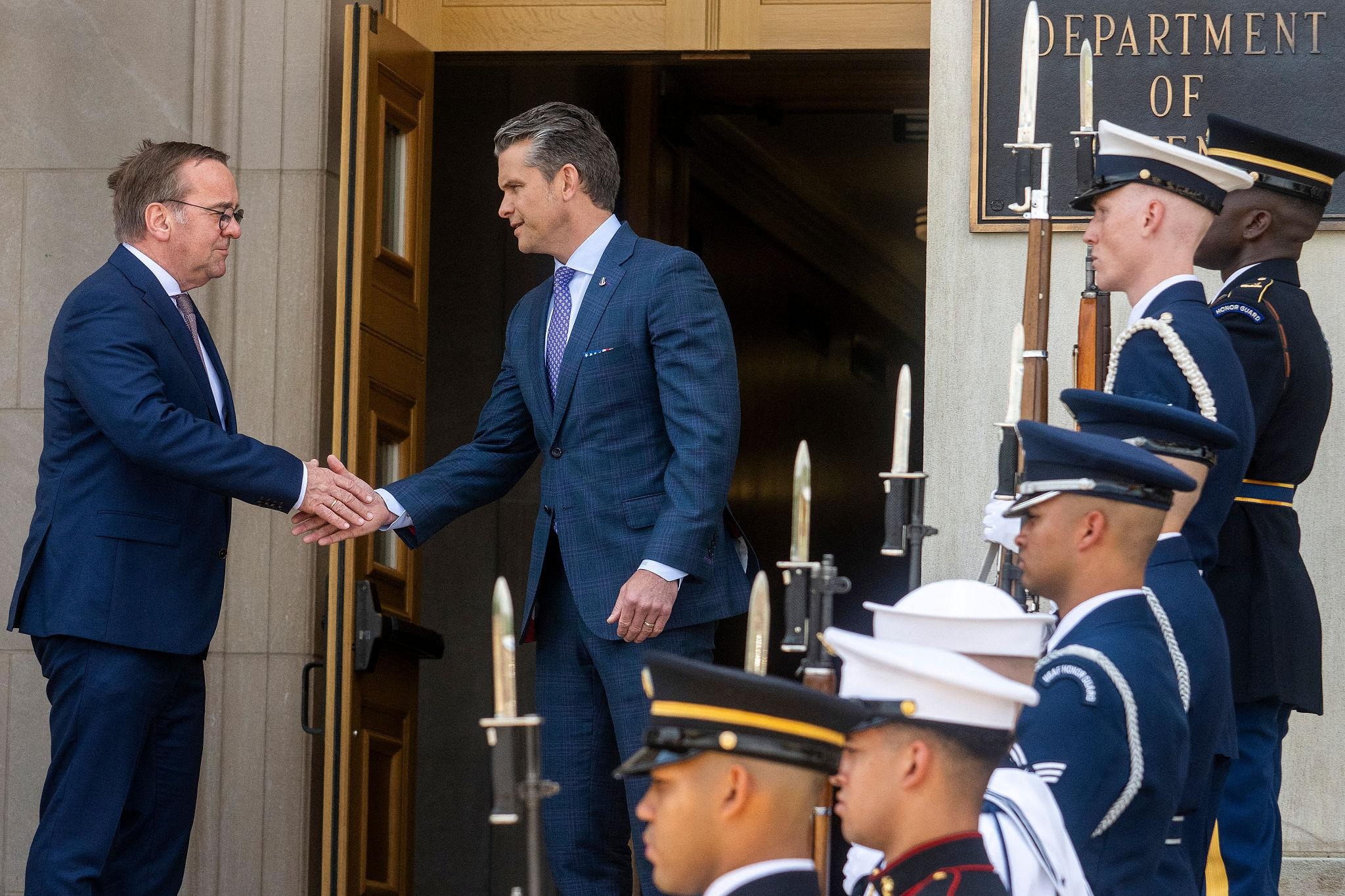
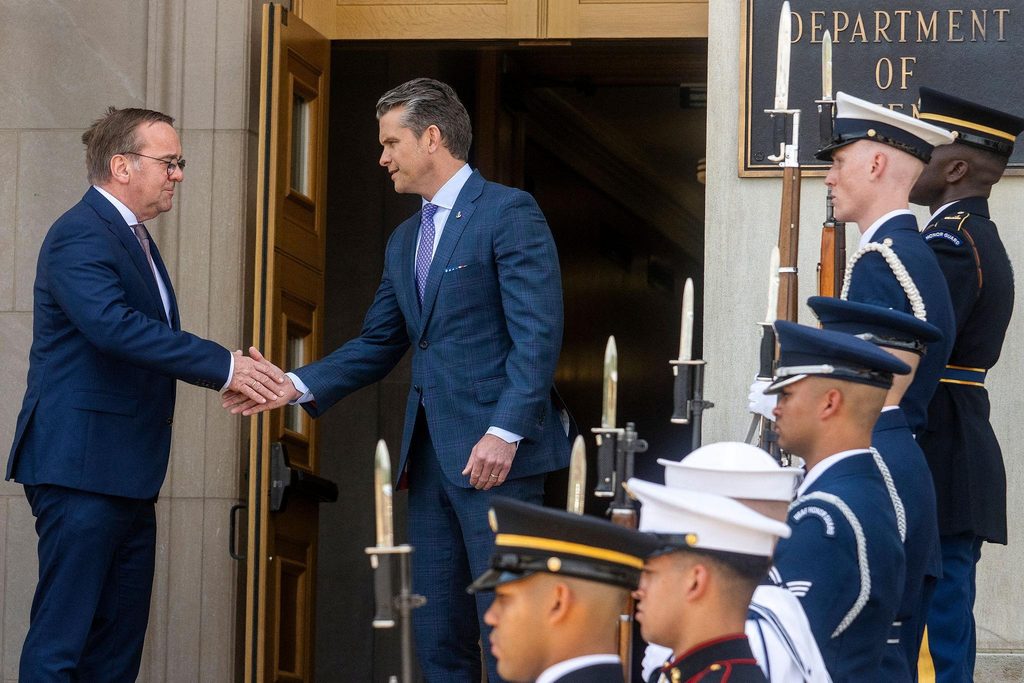
German Defense Minister Boris Pistorius and U.S. Defense Secretary Pete Hegseth announced the agreement Tuesday during Pistorius’ visit to the Pentagon. For Germany, the deal also provides a tangible element to its defense relationship with Washington at a time when uncertainty over U.S. President Donald Trump’s approach to NATO and European security has raised concerns among European allies.
Hegseth described the arrangement as an effort to bring together defense procurement and industrial reforms being pursued by both countries.
He said greater alignment could create more opportunities for the two nations to jointly develop and manufacture weapons, produce systems under license, and expand maintenance and sustainment capabilities—areas he characterized as important for allied cooperation.
Germany already has experience producing U.S. air-defense equipment. The German subsidiary of European missile manufacturer MBDA currently manufactures PAC-2 Patriot interceptors, while production of the newer PAC-3 MSE variant is expected to start at MBDA’s Schrobenhausen facility later this year, Pistorius said.
German and U.S. officials will also examine whether German industry could manufacture or supply selected components for the Tomahawk cruise missile, according to Pistorius.
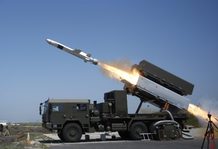
Germany is seeking to acquire Tomahawk missiles and Typhon launch systems as elements of its developing long-range “deep precision strike” capability. Although Washington and Berlin have reached a political understanding regarding the sale, expanding production capacity for the weapons is expected to take more time than German defense planners would prefer.
The Patriot interceptor and Tomahawk missile illustrate the broader shortage of certain advanced weapons.
Several European countries have transferred substantial portions of their Patriot stocks to Ukraine to support its defenses against Russian missile and drone attacks. Those nations are consequently facing the challenge of replenishing their own inventories.
Tomahawk availability has also become more constrained. U.S. forces are reported to have used significant numbers of the missiles during the conflict with Iran, further limiting supplies for European governments seeking to establish long-range strike capabilities.
Germany is therefore examining other options that could become available sooner. At the same time, it is working on an upgraded version of the Taurus cruise missile, which was jointly developed by Germany and Sweden. Berlin is also participating in a European effort to develop an indigenous alternative under the ELSA initiative.
Pistorius said German officials are additionally examining the Anthem cruise missile being developed by U.S. company Covenant, while Germany is also considering defense-industrial cooperation with Ukraine.
The closer German-American defense relationship could nevertheless create friction among European advocates of greater strategic and industrial independence, particularly in France.
In recent years, Berlin has moved away from several joint European weapons-development efforts in favor of acquiring U.S.-built systems that could be fielded more quickly. These purchases include Boeing P-8 maritime surveillance aircraft and Lockheed Martin F-35 fighter jets.
Some French officials viewed those decisions as weakening bilateral efforts to develop the next generation of aircraft for maritime surveillance and combat aviation.
France has also consistently objected to European funding being used to manufacture American-designed weapons under license. In February 2025, then-Armed Forces Minister Sebastien Lecornu, who is now prime minister, described such an approach as a “historic mistake.”
The French government has argued that European Union defense funding should instead strengthen the continent’s own industrial base. Paris has pointed to Germany’s production of Patriot interceptors as an example, arguing that European resources could instead support systems such as the French-Italian SAMP/T, whose development and design authority are based in Europe.
During their Pentagon appearance Tuesday, Hegseth concentrated largely on the practical aspects of the new industrial cooperation agreement, while Pistorius placed the arrangement within a broader security context.
Pistorius said European and American allies were facing a security environment that he described as the most serious threat to the alliance and the West since the Cold War.
He pointed to Russia’s continuing war in Ukraine, the modernization of its nuclear forces, its expanding activity in the Arctic and its military activities in space.
According to Pistorius, Russia is expected to remain the principal threat to Euro-Atlantic security for the foreseeable future.
Following his Pentagon meeting, Pistorius was scheduled to meet members of the U.S. Congress as well as executives from American defense companies, according to Germany’s Ministry of Defense.
His Washington visit is scheduled to conclude Friday with a ceremony in Fort Worth, Texas, marking the handover of Germany’s first F-35 fighter produced at Lockheed Martin’s facility.
Germany has so far ordered 35 F-35 aircraft, although officials in Berlin are considering expanding the order.