The Netherlands and Belgium are continuing discussions over a delayed program to jointly develop new anti-submarine warfare frigates, even as Belgium examines whether another European shipbuilder could provide replacement vessels sooner.
Belgian officials have stressed that the country cannot allow a capability gap to emerge as its two current frigates approach the end of their service lives. According to Dutch news agency ANP, Belgian Chief of Defence Gen. Frederik Vansina said Belgium needs replacement ships in time to maintain its naval capabilities.
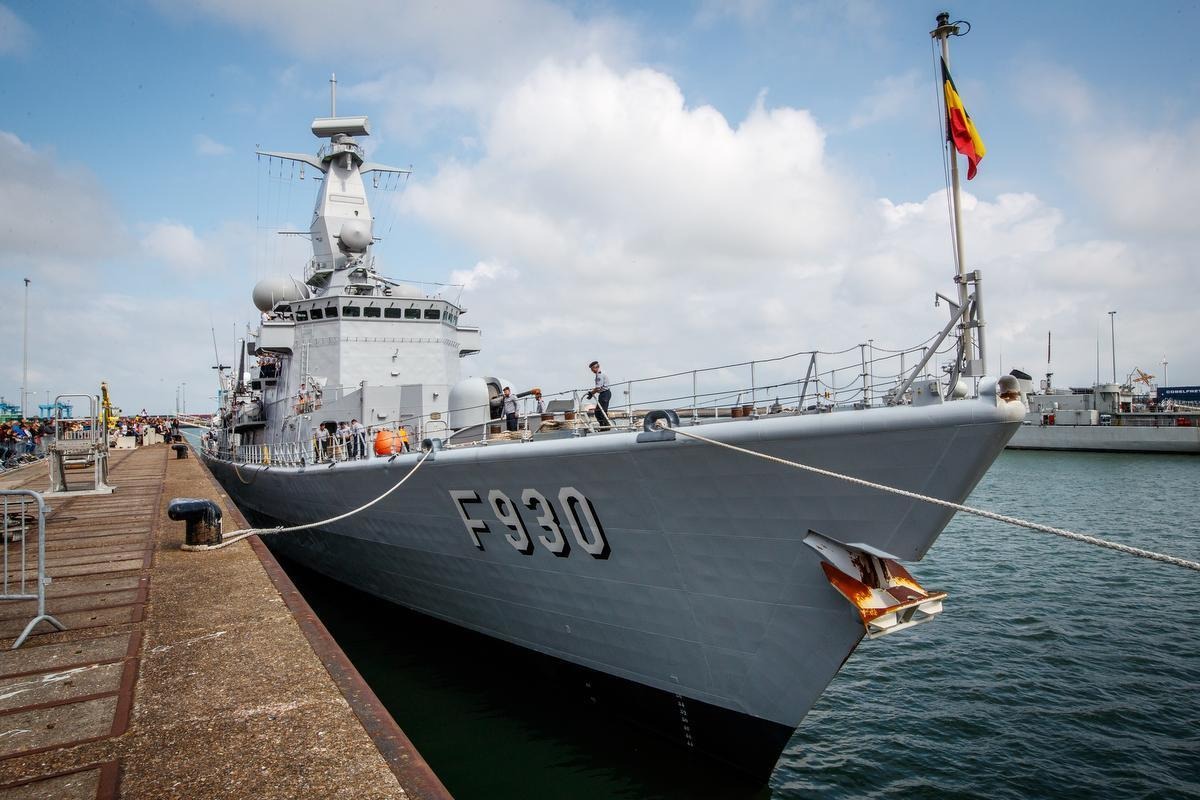
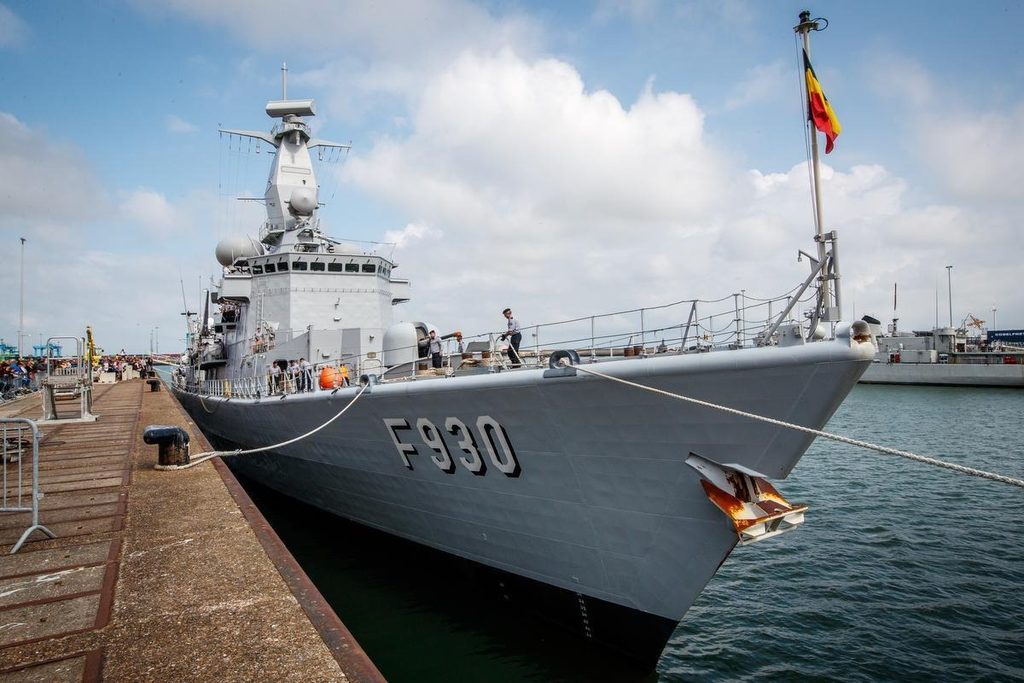
Vansina said Belgium does not intend to impose conditions on the Netherlands, but the country cannot risk being left without major surface combatants. The Belgian Navy’s Leopold I and Louise-Marie are expected to reach the end of their operational lives around 2030.
The joint frigate program, led by Dutch shipbuilder Damen, has experienced repeated delays. Problems with the vessel’s design contributed significantly to the schedule slippage, with the ship growing considerably in size and subsequently requiring modifications to address structural stability concerns.
The original schedule anticipated that the first new frigate could enter service around 2025. The Dutch Ministry of Defence now expects delivery of the first anti-submarine warfare frigate no earlier than 2033.
Belgium Examines Interim and European Alternatives
Belgium is reportedly assessing whether other European-built frigates could be delivered sooner. ANP, citing Vansina, reported that Belgian officials are examining options including Italian-built ships and have also discussed possible interim arrangements with the Netherlands.
One potential temporary solution could involve Damen supplying a smaller frigate to bridge the gap until the new anti-submarine warfare vessels are available.
Vansina characterized Belgium’s discussions with alternative shipbuilders as a practical step rather than a sign of hostility toward the Netherlands.
“It’s paramount for Belgium to maintain that operational capability,” Vansina told ANP. “The only naval firepower we have are those frigates.”
Belgium’s two current frigates are former Dutch Karel Doorman-class vessels. Both ships were originally built and launched during the 1980s before being transferred to Belgium, which purchased them from the Netherlands in 2005.
Dutch and Belgian Defence Officials Continue Talks
The issue was also discussed this week by Dutch State Secretary for Defence Derk Boswijk and Belgian Defence Minister Theo Francken during a meeting in Brussels on September 28.
Both officials described the meeting publicly as positive and constructive, while Boswijk subsequently told the Dutch parliament that the discussions included several bilateral defence matters.
He said the two governments had agreed not to address media reports about the frigate cooperation because of the commercially sensitive nature of the procurement process.
The comments came amid reports that Belgium is considering Fincantieri’s FREMM EVO as a potential alternative to the frigates being developed by Damen.
FREMM EVO Emerges as a Potential Replacement
According to a report by Belgian public broadcaster VRT, an internal Belgian Navy assessment identified the Italian FREMM EVO as the leading alternative.
The analysis reportedly found that Fincantieri could deliver the first vessel by 2030, potentially allowing Belgium to remain within its allocated budget of €3.2 billion ($3.6 billion) for three frigates.
Another possibility under consideration is Naval Group’s FDI frigate. However, VRT reported that meeting a 2030 delivery target could be difficult because the French shipyard already has substantial commitments from France, Greece and Sweden.
The Netherlands’ own 2026 materiel project plan confirms that the delivery schedule for its new anti-submarine warfare frigates has moved to 2033. The delay followed changes required to correct issues with the original ship design.
A Program That Has Been Delayed Repeatedly
The frigate program has undergone several schedule revisions since it was first outlined.
A 2018 Dutch Ministry of Defence project-goal document anticipated that the first vessel could become operational around 2025. At the time, the ministry planned to seek proposals from Damen and Thales Nederland without conducting a competitive tender.
Later in 2018, the Netherlands and Belgium signed a memorandum of understanding under which Belgium was expected to receive its ships by 2030 at the latest.
After discussions with Damen as the planned shipbuilder and Thales as the supplier of radar and fire-control technology, the Dutch Defence Ministry told parliament in 2020 that approximately two years of detailed design work would be required before construction could begin. The first ship was then expected to be delivered in 2027 and become operational the following year.
By 2023, the projected construction start had moved to 2025, while delivery was pushed back by another year.
That procurement proposal also discussed potential cooperation with Germany on the F126 frigate program, which was being developed by Damen. Germany has since abandoned that program after years of schedule problems and rising costs.
Growing Fleet Requirements and Costs
The original arrangement called for the Netherlands to procure two frigates for its own navy and two additional vessels for Belgium.
The Dutch government announced in 2024 that it intended to expand its own purchase to four ships. Belgium subsequently announced in 2025 that it would increase its planned acquisition to three frigates.
The cost of the Dutch portion has also risen. In a 2023 parliamentary document, the Defence Ministry estimated the price of two Dutch frigates at €1.88 billion. That figure was subsequently revised upward to €1.96 billion in early 2024.
The ships themselves have also become substantially larger during the development process.
In mid-2020, the planned frigate was expected to displace approximately 5,500 tonnes. The current design is closer to 6,400 tonnes, almost twice the roughly 3,300-tonne displacement of the existing M-class frigates that the new ships are intended to replace.
For Belgium, the combination of an aging frigate fleet and the delayed Dutch-led program has increased the importance of finding a way to maintain naval capability through the transition. The two countries are continuing discussions, while Belgium evaluates whether an alternative procurement or an interim vessel could prevent a gap before the new anti-submarine warfare frigates become available.